AT LOIS WE BELIEVE IN PEOPLE
AND TALENT.

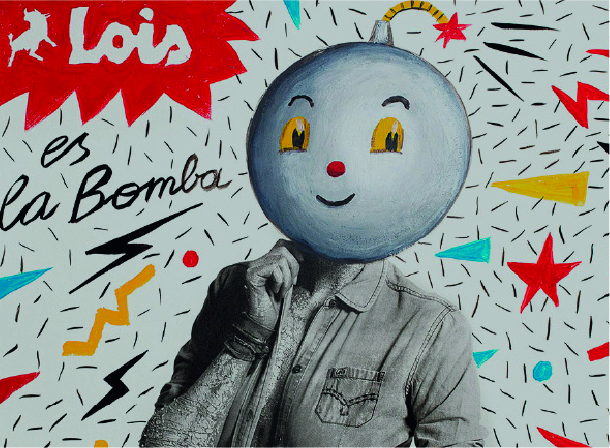
HERE YOU CAN SEE OUR COLLABORATIONS WITH ARTISTS.

Lois has been involved in the worlds of art, experimentation and creativity since the very beginning. Through the Lois Art initiative, the brand aims to give a voice to emerging artists. In different calls for entries, artists are invited to interpret the brand from their unique and personal point of view.

01

José Luis Parada

Illustrator, painter, airbrush artist

02

Turkesa

The strength of female power

03

Sergio Mora

Magicomora

04

Saturno (The Creatter)

The face behind Saturn's mask

05

Laura Núñez

Filmmaker and film buff of restless mind

06

Juan Antonio Valverde

Concept Visual Artist

07

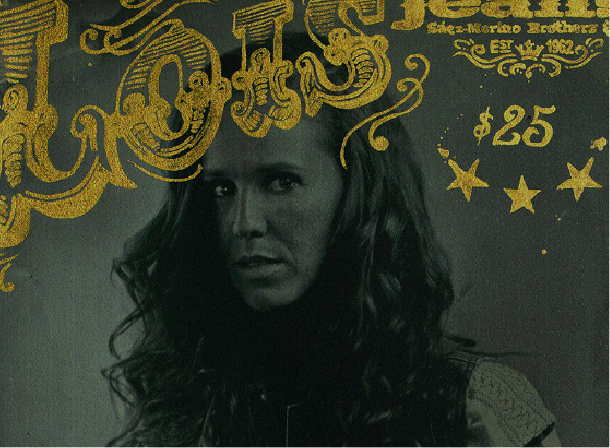
Joaquín Paredes

Photographer specialising in wet collodion

08

James H. Soul

A singular artist in the midst of the digital age

09

James H. Soul

A singular artist in the midst of the digital age

10

James H. Soul

A singular artist in the midst of the digital age

11

Espinaca Explosiva

Multidisciplinary artist and illustrator

12

Edu Mora

Professional artist

13

Duna Riera

Restless, demanding, perfectionist

14

Andrés Cerezo

Multidisciplinary, touching all fields in art

15

Ana Penadés

Denim Fashion Designer

JOSÉ LUIS PARADA

Illustrator, Painter and Airbrush Artist

Director and co-founder of Action Art Europe, a school of airbrushing and fine arts.

Before accepting that I was actually an artist, I wanted to become an investigative journalist to shed light on the truth about humanity and all that it does; to bring some light into the shadows.

I chose to live by learning —and then teaching— how to do things the right way. Realistic illustration led me to explore all manual techniques until I found airbrush illustration, which led me to classical painting.

Worlds, people and universes of different shapes, colours and cultures… eventually they all have the same principles. 25 years later I think I was not mistaken. Art helped me find truth and joy and guided me on the right path. Art gave me everything, and surely, we got along very well and had a lot of fun together.

TURKESA

The strength of female power

Turkesa is from Zaragoza and is based in Barcelona.

She showed her passion for art when she was very young and since then she has been drawing and improving, both at school and at the School of Arts and Crafts in Zaragoza. While studying there, she met her first mentor and teacher Ignacio Mayayo, for whom she posed from time to time, and began to paint live. At the same time, she began to paint in the streets, starting what would unknowingly become her career as an urban artist.

After moving to Valencia to study Fine Arts at university, which she left and continued intermittently for a decade while travelling, she changed residence and sought experiences that would bring new emotions to her art. She spent years travelling between Sardinia and Spain and then studied photography for a year in London, where she began a full-time career as an artist.

During these years, Turkesa participated in exhibitions in multiple European cities, as well as in international graffiti festivals around the world, trying to make a place in the world for female art, especially in urban areas.

In the early years of her career, her graffiti alias was Rabodiga, a name that comes from her family history, but a few years later she changed it to the current TURKESA.

In 2011 she started tattooing in her partner’s studio, and gradually began to improve her technique. Soon after she won an award at the Barcelona Tattoo Exhibition for best new artist of 2011. Since then she has continued to evolve and create a delicate and painterly personal style.

Currently, Turkesa works as a tattoo artist in Barcelona, and combines it with wall and canvas painting, preparing some solo exhibitions.

Turkesa’s sign has always been female representation, and from the beginning it has evolved as the artist grew. Lately, she is looking for new ways to get away from this feminine figure that, unconsciously, she has repeatedly used as her alter ego and, instead, recreate a sense of femininity from the fight, based on nature and the unknown.

Turkesa’s influences are the most traditional classical paintings and painters. However, what has really inspired this artist is the environment that surrounds her, and the inner world that is able to recreate through her emotions.

Sergio Mora

Magicomora

Magicomora is a bold, shocking, mind-altering and colourful kaleidoscope. He was born in Barcelona in 1975, the same city where he graduated (La Llotja), and where he paints, experiments, plays and creates. If we look at the world through his eyes, with a gaze as clean as it is utopian, we would discover a brilliant mythology that mixes icons with which we all identify with fantasy and spectacle, the surprising and the illusory.

Being multidisciplinary artist, his prolific work takes us into subversive, circus-like worlds with beautiful monsters and grotesque fantasies and in all the variants: painting, illustration, video, comic and performance. His personal artistic decalogue and, above all, his pictorial idiosyncrasy has turned him into the greatest exponent of Pop Surrealism in Spain. This has allowed him to exhibit internationally, edit books, publish in several magazines, design for advertising campaigns, as well as take on many other collaborations.

Saturno (The Creatter)

The face behind Saturn's mask

Miguel Ángel Sánchez is the face behind Saturn’s mask.

Born in 1979 in a small town about a hundred kilometres from Barcelona, his contact with the world of graffiti was limited to television and a handful of DIY fanzines that allowed him to start publishing his art in a completely self-taught way.

His unique style evolved at top speed until 1995, making him one of the benchmarks of the European graffiti scene. His painting skills are already a mark of style that makes all his works easily recognisable. In addition to graffiti, his technique excels in other fields and areas, such as digital illustration and graphic design.

His latest challenge has been to apply all his experience and knowledge to traditional painting. A new challenge. A new victory.

Laura Núñez

Filmmaker and film buff of restless mind

My goal in life is to become something similar to an artist. With this idea in mind, I studied Audiovisual Communication at the Pompeu Fabra University in Barcelona, and then I spent six months as an intern at the Bauhaus-Universität in Weimar, where I started shooting short films and perfecting my skills in experimental animation techniques.

After working in several production companies, I set up my own audiovisual production company, together with a colleague, called “Expectativa Producciones y Comunicación”, where I currently work. At the same time, I have volunteered and served as a juror at several film festivals.

I love learning and experimenting. I have always liked drawing, although all my works are self-taught. I am also a weekly contributor to the Facebook page “Weekly Scenario”, where several international artists make drawings on a common theme.

Juan Antonio Valverde

Concept Visual Artist

Title for the LOIS ART 2017 edition: “Miss Machine”

Technique: acrylic, black ink, felt-tip pen, white chalk

Theme: Rock, rockstar tribute, Prince, Lemmy Kilmister, David Bowie, old-school tattoo.

Joaquín Paredes

Photographer specialising in wet collodion

A photographer who specialises in historical processes. Despite having studied architecture, he soon discovered that he had a real vocation for photography and decided to devote himself to it.

In his early years of work, he decided to forgo the use of digital technology in order to experiment with 19th century photographic processes with the aim to restore them to their rightful place in contemporary photography. This creative need led him to build his own large-format cameras.

His own works have been exhibited at the Real Academia de Bellas Artes San Fernando in Madrid, at international festivals such as Cáceres de Foto and Revela-T (Barcelona), as well as in Timisoara (Romania).

His photographs have been exhibited internationally in specialised magazines such as L’Oeil de la Photographie (France), Adore Noir (Canada) and Lomography Magazine.

James H. Soul

A singular artist in the midst of the digital age

James H. Soul (1970) does not like to talk about his life; questions make him uncomfortable, and he evades the subject by making a joke or remarking that it is probably true. Born to a Dutch mother and an unknown father, James travelled extensively during his childhood, along with his siblings and relatives. Rumour has it, or so I have come to believe, that his father was the drummer in a famous band in the 1970s.

His younger sister lives in Porto Seguro, Brazil. He does not deny it, and with resentment adds that their parents abandoned them in Pretoria, South Africa, while his father’s band was on tour there.

James, Carmen and Haché, his younger brother, suddenly found themselves alone in a luxury hotel, with their parents missing after a night of alcohol and drugs. After spending a week living in the hotel, their aunt took them with her to her home in Amsterdam, where they spent most of their teenage years. It was there that James began to experiment and develop his creative skills, mixing photography and painting early on.

However, a fire at his aunt’s house destroyed most of his early work. Only a few of them, which he keeps in a safe place, were spared. Following the incident, the three brothers wandered around the world and little was known of their lives until 2010, when I met James at a friend’s restaurant in Ibiza. He worked as a waiter, didn’t look like an artist at all and was very open and partying. I liked him from the beginning.

After a night of partying, some of the group of friends who had gone out, including me, went to his small flat, where I saw some of the works he had been doing from time to time. I was very impressed by them as they were unlike anything I had seen so far, with the possible exception of the works of Peter Beard —though without the exoticism of Africa— or perhaps those of Robert Rauschenberg, with his typical collages and mixture of techniques.

I suggested James should leave Ibiza and coming with me to Barcelona, where I would help him develop all the talent that I saw he had but that, for various reasons, he had not been able to exploit. He arrived in Barcelona shortly afterwards and we set about working on his first photo shoot: a complete parade of manual processes I hadn’t seen in a long time, a camera with negative plates, and hours in the photo lab: “I had forgotten what the liquids smelled like,” he said, “artistic papers, brushes, watercolours, pens, ink…” A complex process that was entirely manual. A singular artist in the midst of the digital age; that’s James.

James H. Soul

A singular artist in the midst of the digital age

James H. Soul (1970) does not like to talk about his life; questions make him uncomfortable, and he evades the subject by making a joke or remarking that it is probably true. Born to a Dutch mother and an unknown father, James travelled extensively during his childhood, along with his siblings and relatives. Rumour has it, or so I have come to believe, that his father was the drummer in a famous band in the 1970s.

His younger sister lives in Porto Seguro, Brazil. He does not deny it, and with resentment adds that their parents abandoned them in Pretoria, South Africa, while his father’s band was on tour there.

James, Carmen and Haché, his younger brother, suddenly found themselves alone in a luxury hotel, with their parents missing after a night of alcohol and drugs. After spending a week living in the hotel, their aunt took them with her to her home in Amsterdam, where they spent most of their teenage years. It was there that James began to experiment and develop his creative skills, mixing photography and painting early on.

However, a fire at his aunt’s house destroyed most of his early work. Only a few of them, which he keeps in a safe place, were spared. Following the incident, the three brothers wandered around the world and little was known of their lives until 2010, when I met James at a friend’s restaurant in Ibiza. He worked as a waiter, didn’t look like an artist at all and was very open and partying. I liked him from the beginning.

After a night of partying, some of the group of friends who had gone out, including me, went to his small flat, where I saw some of the works he had been doing from time to time. I was very impressed by them as they were unlike anything I had seen so far, with the possible exception of the works of Peter Beard —though without the exoticism of Africa— or perhaps those of Robert Rauschenberg, with his typical collages and mixture of techniques.

I suggested James should leave Ibiza and coming with me to Barcelona, where I would help him develop all the talent that I saw he had but that, for various reasons, he had not been able to exploit. He arrived in Barcelona shortly afterwards and we set about working on his first photo shoot: a complete parade of manual processes I hadn’t seen in a long time, a camera with negative plates, and hours in the photo lab: “I had forgotten what the liquids smelled like,” he said, “artistic papers, brushes, watercolours, pens, ink…” A complex process that was entirely manual. A singular artist in the midst of the digital age; that’s James.

James H. Soul

A singular artist in the midst of the digital age

James H. Soul (1970) does not like to talk about his life; questions make him uncomfortable, and he evades the subject by making a joke or remarking that it is probably true. Born to a Dutch mother and an unknown father, James travelled extensively during his childhood, along with his siblings and relatives. Rumour has it, or so I have come to believe, that his father was the drummer in a famous band in the 1970s.

His younger sister lives in Porto Seguro, Brazil. He does not deny it, and with resentment adds that their parents abandoned them in Pretoria, South Africa, while his father’s band was on tour there.

James, Carmen and Haché, his younger brother, suddenly found themselves alone in a luxury hotel, with their parents missing after a night of alcohol and drugs. After spending a week living in the hotel, their aunt took them with her to her home in Amsterdam, where they spent most of their teenage years. It was there that James began to experiment and develop his creative skills, mixing photography and painting early on.

However, a fire at his aunt’s house destroyed most of his early work. Only a few of them, which he keeps in a safe place, were spared. Following the incident, the three brothers wandered around the world and little was known of their lives until 2010, when I met James at a friend’s restaurant in Ibiza. He worked as a waiter, didn’t look like an artist at all and was very open and partying. I liked him from the beginning.

After a night of partying, some of the group of friends who had gone out, including me, went to his small flat, where I saw some of the works he had been doing from time to time. I was very impressed by them as they were unlike anything I had seen so far, with the possible exception of the works of Peter Beard —though without the exoticism of Africa— or perhaps those of Robert Rauschenberg, with his typical collages and mixture of techniques.

I suggested James should leave Ibiza and coming with me to Barcelona, where I would help him develop all the talent that I saw he had but that, for various reasons, he had not been able to exploit. He arrived in Barcelona shortly afterwards and we set about working on his first photo shoot: a complete parade of manual processes I hadn’t seen in a long time, a camera with negative plates, and hours in the photo lab: “I had forgotten what the liquids smelled like,” he said, “artistic papers, brushes, watercolours, pens, ink…” A complex process that was entirely manual. A singular artist in the midst of the digital age; that’s James.

Espinaca Explosiva

Multidisciplinary artist and illustrator

Her work is full of imaginary and sometimes very famous characters, with a style and way of working that are overly clean. She was born in Valencia in 1992 and currently lives in the emerging neighbourhood of Ruzafa. Nobody knows when she started drawing, but she has never stopped since.

She makes up words when she doesn’t know what to say, and likes unicorns, tigers and tropical plants, always combined with spatial elements. She graduated in Fine Arts between the universities of Venice and Valencia, and has a degree in Graphic Design from the School of Art and Design in Valencia.

She has been part of exhibitions such as UNKNOWN ART and the Fashionalistas platform FACTORY with her naive illustrations that tell stories considered a bit weird.

Edu Mora

Professional artist

My vocation has always been closely linked to drawing and illustration, which led me to study Fine Arts, although the audiovisual world is also a field that attracts me a lot. That is why I decided to study both degrees; Fine Arts and Audiovisual Communication.

So far, and due to the time invested in my studies, I have not really been able to finish any of my personal projects apart from the ones I carried out during my training years. However, I have collaborated on works that have been very well received, as well as others that I cannot talk about as they are still in progress and unfinished.

My most important collaboration was for the animated short film “Ex Libris”, by María Trénor, which earned her a nomination for the Goya Awards. For this short film, I made 240 ink drawings to animate a scene when I was only 15 years old. After that, my work has been more focused on my career.

Duna Riera

Restless, demanding, perfectionist

Born in Barcelona in 1975, when she turned 40 she was involved in a million projects. With a publisher mother and an industrial designer father, Duna’s curiosity led her to study Graphic Design at the Elisava School, then Photography at the Institut d’Estudis Fotografic de Catalunya (IEFC) and, finally, Fine Arts at the University of Barcelona.

However, she did not finish any of these three courses: “by the last year, I couldn’t take it any more”, she said, “because the creative concept is more important than standardised academic structures, which give no pleasure nor freedom, not even to explore one’s own margin for error”.

She is comfortable in several different fields, such as photography, painting, illustration and design (both graphic and industrial). In fact, she was awarded Bronze in the Pentawards Worldwide Packaging Design Awards Competition in 2011. But Duna prefers not to be pigeonholed: “If I had to describe myself, I would say I’m a creator, which means I’m still experimenting all the time”.

Andrés Cerezo

Multidisciplinary, touching all fields in art

My name is Andrés Cerezo Pérez, and I was born in Vila-Real (Castellón) on 28 January 1985. I studied Art at high school and later Product Design at the School of Art and Design in Castellón.

After finishing my degree in 2013, I started working in the RD departments of several companies in the ceramic sector, creating designs for ceramic tiles and flooring. But I didn’t find my true passion until I bought a screen printing machine in the summer of 2013 and started printing T-shirts with my illustrations.

I collaborate with countless altruistic projects of all kinds (what they call “for the love of art” in Spanish, meaning altruistically) with teaching Graphic Arts Expression at the Spai d’Art (Youth Council of Vila-Real) and occasionally painting furniture for my family’s carpentry business.

Ana Penadés

Denim Fashion Designer

I have always had a special passion for denim. In fact, you could even say I have “blue blood”, not because I was born into a noble family, but because I am so passionate about this fabric, that I like to think that the indigo blue colour, used to dye denim, runs through my veins.

Due to my passion for denim, I studied fashion design, and specialised professionally in the mastery of denim creations, working as a designer for several international brands.

Later I also studied Fine Arts, with the aim of finding a graphic language to be able to decontextualise jeans and create images in which the main material was the jeans itself. My whole graphic universe revolves around jeans.

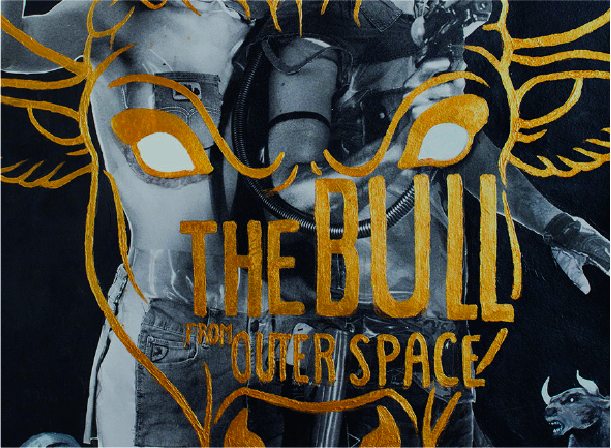
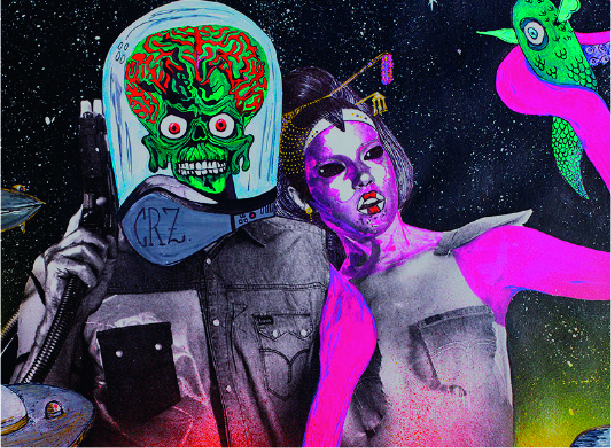
Materials used: used jeans, Swarovski crystals and chains. Technique: Collage

JOSÉ LUIS PARADA

Illustrator, Painter and Airbrush Artist

Director and co-founder of Action Art Europe, a school of airbrushing and fine arts.

Before accepting that I was actually an artist, I wanted to become an investigative journalist to shed light on the truth about humanity and all that it does; to bring some light into the shadows.

I chose to live by learning —and then teaching— how to do things the right way. Realistic illustration led me to explore all manual techniques until I found airbrush illustration, which led me to classical painting.

Worlds, people and universes of different shapes, colours and cultures… eventually they all have the same principles. 25 years later I think I was not mistaken. Art helped me find truth and joy and guided me on the right path. Art gave me everything, and surely, we got along very well and had a lot of fun together.

TURKESA

The strength of female power

Turkesa is from Zaragoza and is based in Barcelona.

She showed her passion for art when she was very young and since then she has been drawing and improving, both at school and at the School of Arts and Crafts in Zaragoza. While studying there, she met her first mentor and teacher Ignacio Mayayo, for whom she posed from time to time, and began to paint live. At the same time, she began to paint in the streets, starting what would unknowingly become her career as an urban artist.

After moving to Valencia to study Fine Arts at university, which she left and continued intermittently for a decade while travelling, she changed residence and sought experiences that would bring new emotions to her art. She spent years travelling between Sardinia and Spain and then studied photography for a year in London, where she began a full-time career as an artist.

During these years, Turkesa participated in exhibitions in multiple European cities, as well as in international graffiti festivals around the world, trying to make a place in the world for female art, especially in urban areas.

In the early years of her career, her graffiti alias was Rabodiga, a name that comes from her family history, but a few years later she changed it to the current TURKESA.

In 2011 she started tattooing in her partner’s studio, and gradually began to improve her technique. Soon after she won an award at the Barcelona Tattoo Exhibition for best new artist of 2011. Since then she has continued to evolve and create a delicate and painterly personal style.

Currently, Turkesa works as a tattoo artist in Barcelona, and combines it with wall and canvas painting, preparing some solo exhibitions.

Turkesa’s sign has always been female representation, and from the beginning it has evolved as the artist grew. Lately, she is looking for new ways to get away from this feminine figure that, unconsciously, she has repeatedly used as her alter ego and, instead, recreate a sense of femininity from the fight, based on nature and the unknown.

Turkesa’s influences are the most traditional classical paintings and painters. However, what has really inspired this artist is the environment that surrounds her, and the inner world that is able to recreate through her emotions.

Sergio Mora

Magicomora

Magicomora is a bold, shocking, mind-altering and colourful kaleidoscope. He was born in Barcelona in 1975, the same city where he graduated (La Llotja), and where he paints, experiments, plays and creates. If we look at the world through his eyes, with a gaze as clean as it is utopian, we would discover a brilliant mythology that mixes icons with which we all identify with fantasy and spectacle, the surprising and the illusory.

Being multidisciplinary artist, his prolific work takes us into subversive, circus-like worlds with beautiful monsters and grotesque fantasies and in all the variants: painting, illustration, video, comic and performance. His personal artistic decalogue and, above all, his pictorial idiosyncrasy has turned him into the greatest exponent of Pop Surrealism in Spain. This has allowed him to exhibit internationally, edit books, publish in several magazines, design for advertising campaigns, as well as take on many other collaborations.

Saturno (The Creatter)

The face behind Saturn's mask

Miguel Ángel Sánchez is the face behind Saturn’s mask.

Born in 1979 in a small town about a hundred kilometres from Barcelona, his contact with the world of graffiti was limited to television and a handful of DIY fanzines that allowed him to start publishing his art in a completely self-taught way.

His unique style evolved at top speed until 1995, making him one of the benchmarks of the European graffiti scene. His painting skills are already a mark of style that makes all his works easily recognisable. In addition to graffiti, his technique excels in other fields and areas, such as digital illustration and graphic design.

His latest challenge has been to apply all his experience and knowledge to traditional painting. A new challenge. A new victory.

Laura Núñez

Filmmaker and film buff of restless mind

My goal in life is to become something similar to an artist. With this idea in mind, I studied Audiovisual Communication at the Pompeu Fabra University in Barcelona, and then I spent six months as an intern at the Bauhaus-Universität in Weimar, where I started shooting short films and perfecting my skills in experimental animation techniques.

After working in several production companies, I set up my own audiovisual production company, together with a colleague, called “Expectativa Producciones y Comunicación”, where I currently work. At the same time, I have volunteered and served as a juror at several film festivals.

I love learning and experimenting. I have always liked drawing, although all my works are self-taught. I am also a weekly contributor to the Facebook page “Weekly Scenario”, where several international artists make drawings on a common theme.

Juan Antonio Valverde

Concept Visual Artist

Title for the LOIS ART 2017 edition: “Miss Machine”

Technique: acrylic, black ink, felt-tip pen, white chalk

Theme: Rock, rockstar tribute, Prince, Lemmy Kilmister, David Bowie, old-school tattoo.

Joaquín Paredes

Photographer specialising in wet collodion

A photographer who specialises in historical processes. Despite having studied architecture, he soon discovered that he had a real vocation for photography and decided to devote himself to it.

In his early years of work, he decided to forgo the use of digital technology in order to experiment with 19th century photographic processes with the aim to restore them to their rightful place in contemporary photography. This creative need led him to build his own large-format cameras.

His own works have been exhibited at the Real Academia de Bellas Artes San Fernando in Madrid, at international festivals such as Cáceres de Foto and Revela-T (Barcelona), as well as in Timisoara (Romania).

His photographs have been exhibited internationally in specialised magazines such as L’Oeil de la Photographie (France), Adore Noir (Canada) and Lomography Magazine.

James H. Soul

A singular artist in the midst of the digital age

James H. Soul (1970) does not like to talk about his life; questions make him uncomfortable, and he evades the subject by making a joke or remarking that it is probably true. Born to a Dutch mother and an unknown father, James travelled extensively during his childhood, along with his siblings and relatives. Rumour has it, or so I have come to believe, that his father was the drummer in a famous band in the 1970s.

His younger sister lives in Porto Seguro, Brazil. He does not deny it, and with resentment adds that their parents abandoned them in Pretoria, South Africa, while his father’s band was on tour there.

James, Carmen and Haché, his younger brother, suddenly found themselves alone in a luxury hotel, with their parents missing after a night of alcohol and drugs. After spending a week living in the hotel, their aunt took them with her to her home in Amsterdam, where they spent most of their teenage years. It was there that James began to experiment and develop his creative skills, mixing photography and painting early on.

However, a fire at his aunt’s house destroyed most of his early work. Only a few of them, which he keeps in a safe place, were spared. Following the incident, the three brothers wandered around the world and little was known of their lives until 2010, when I met James at a friend’s restaurant in Ibiza. He worked as a waiter, didn’t look like an artist at all and was very open and partying. I liked him from the beginning.

After a night of partying, some of the group of friends who had gone out, including me, went to his small flat, where I saw some of the works he had been doing from time to time. I was very impressed by them as they were unlike anything I had seen so far, with the possible exception of the works of Peter Beard —though without the exoticism of Africa— or perhaps those of Robert Rauschenberg, with his typical collages and mixture of techniques.

I suggested James should leave Ibiza and coming with me to Barcelona, where I would help him develop all the talent that I saw he had but that, for various reasons, he had not been able to exploit. He arrived in Barcelona shortly afterwards and we set about working on his first photo shoot: a complete parade of manual processes I hadn’t seen in a long time, a camera with negative plates, and hours in the photo lab: “I had forgotten what the liquids smelled like,” he said, “artistic papers, brushes, watercolours, pens, ink…” A complex process that was entirely manual. A singular artist in the midst of the digital age; that’s James.

James H. Soul

A singular artist in the midst of the digital age

James H. Soul (1970) does not like to talk about his life; questions make him uncomfortable, and he evades the subject by making a joke or remarking that it is probably true. Born to a Dutch mother and an unknown father, James travelled extensively during his childhood, along with his siblings and relatives. Rumour has it, or so I have come to believe, that his father was the drummer in a famous band in the 1970s.

His younger sister lives in Porto Seguro, Brazil. He does not deny it, and with resentment adds that their parents abandoned them in Pretoria, South Africa, while his father’s band was on tour there.

James, Carmen and Haché, his younger brother, suddenly found themselves alone in a luxury hotel, with their parents missing after a night of alcohol and drugs. After spending a week living in the hotel, their aunt took them with her to her home in Amsterdam, where they spent most of their teenage years. It was there that James began to experiment and develop his creative skills, mixing photography and painting early on.

However, a fire at his aunt’s house destroyed most of his early work. Only a few of them, which he keeps in a safe place, were spared. Following the incident, the three brothers wandered around the world and little was known of their lives until 2010, when I met James at a friend’s restaurant in Ibiza. He worked as a waiter, didn’t look like an artist at all and was very open and partying. I liked him from the beginning.

After a night of partying, some of the group of friends who had gone out, including me, went to his small flat, where I saw some of the works he had been doing from time to time. I was very impressed by them as they were unlike anything I had seen so far, with the possible exception of the works of Peter Beard —though without the exoticism of Africa— or perhaps those of Robert Rauschenberg, with his typical collages and mixture of techniques.

I suggested James should leave Ibiza and coming with me to Barcelona, where I would help him develop all the talent that I saw he had but that, for various reasons, he had not been able to exploit. He arrived in Barcelona shortly afterwards and we set about working on his first photo shoot: a complete parade of manual processes I hadn’t seen in a long time, a camera with negative plates, and hours in the photo lab: “I had forgotten what the liquids smelled like,” he said, “artistic papers, brushes, watercolours, pens, ink…” A complex process that was entirely manual. A singular artist in the midst of the digital age; that’s James.

James H. Soul

A singular artist in the midst of the digital age

James H. Soul (1970) does not like to talk about his life; questions make him uncomfortable, and he evades the subject by making a joke or remarking that it is probably true. Born to a Dutch mother and an unknown father, James travelled extensively during his childhood, along with his siblings and relatives. Rumour has it, or so I have come to believe, that his father was the drummer in a famous band in the 1970s.

His younger sister lives in Porto Seguro, Brazil. He does not deny it, and with resentment adds that their parents abandoned them in Pretoria, South Africa, while his father’s band was on tour there.

James, Carmen and Haché, his younger brother, suddenly found themselves alone in a luxury hotel, with their parents missing after a night of alcohol and drugs. After spending a week living in the hotel, their aunt took them with her to her home in Amsterdam, where they spent most of their teenage years. It was there that James began to experiment and develop his creative skills, mixing photography and painting early on.

However, a fire at his aunt’s house destroyed most of his early work. Only a few of them, which he keeps in a safe place, were spared. Following the incident, the three brothers wandered around the world and little was known of their lives until 2010, when I met James at a friend’s restaurant in Ibiza. He worked as a waiter, didn’t look like an artist at all and was very open and partying. I liked him from the beginning.

After a night of partying, some of the group of friends who had gone out, including me, went to his small flat, where I saw some of the works he had been doing from time to time. I was very impressed by them as they were unlike anything I had seen so far, with the possible exception of the works of Peter Beard —though without the exoticism of Africa— or perhaps those of Robert Rauschenberg, with his typical collages and mixture of techniques.

I suggested James should leave Ibiza and coming with me to Barcelona, where I would help him develop all the talent that I saw he had but that, for various reasons, he had not been able to exploit. He arrived in Barcelona shortly afterwards and we set about working on his first photo shoot: a complete parade of manual processes I hadn’t seen in a long time, a camera with negative plates, and hours in the photo lab: “I had forgotten what the liquids smelled like,” he said, “artistic papers, brushes, watercolours, pens, ink…” A complex process that was entirely manual. A singular artist in the midst of the digital age; that’s James.

Espinaca Explosiva

Multidisciplinary artist and illustrator

Her work is full of imaginary and sometimes very famous characters, with a style and way of working that are overly clean. She was born in Valencia in 1992 and currently lives in the emerging neighbourhood of Ruzafa. Nobody knows when she started drawing, but she has never stopped since.

She makes up words when she doesn’t know what to say, and likes unicorns, tigers and tropical plants, always combined with spatial elements. She graduated in Fine Arts between the universities of Venice and Valencia, and has a degree in Graphic Design from the School of Art and Design in Valencia.

She has been part of exhibitions such as UNKNOWN ART and the Fashionalistas platform FACTORY with her naive illustrations that tell stories considered a bit weird.

Edu Mora

Professional artist

My vocation has always been closely linked to drawing and illustration, which led me to study Fine Arts, although the audiovisual world is also a field that attracts me a lot. That is why I decided to study both degrees; Fine Arts and Audiovisual Communication.

So far, and due to the time invested in my studies, I have not really been able to finish any of my personal projects apart from the ones I carried out during my training years. However, I have collaborated on works that have been very well received, as well as others that I cannot talk about as they are still in progress and unfinished.

My most important collaboration was for the animated short film “Ex Libris”, by María Trénor, which earned her a nomination for the Goya Awards. For this short film, I made 240 ink drawings to animate a scene when I was only 15 years old. After that, my work has been more focused on my career.

Duna Riera

Restless, demanding, perfectionist

Born in Barcelona in 1975, when she turned 40 she was involved in a million projects. With a publisher mother and an industrial designer father, Duna’s curiosity led her to study Graphic Design at the Elisava School, then Photography at the Institut d’Estudis Fotografic de Catalunya (IEFC) and, finally, Fine Arts at the University of Barcelona.

However, she did not finish any of these three courses: “by the last year, I couldn’t take it any more”, she said, “because the creative concept is more important than standardised academic structures, which give no pleasure nor freedom, not even to explore one’s own margin for error”.

She is comfortable in several different fields, such as photography, painting, illustration and design (both graphic and industrial). In fact, she was awarded Bronze in the Pentawards Worldwide Packaging Design Awards Competition in 2011. But Duna prefers not to be pigeonholed: “If I had to describe myself, I would say I’m a creator, which means I’m still experimenting all the time”.

Andrés Cerezo

Multidisciplinary, touching all fields in art

My name is Andrés Cerezo Pérez, and I was born in Vila-Real (Castellón) on 28 January 1985. I studied Art at high school and later Product Design at the School of Art and Design in Castellón.

After finishing my degree in 2013, I started working in the RD departments of several companies in the ceramic sector, creating designs for ceramic tiles and flooring. But I didn’t find my true passion until I bought a screen printing machine in the summer of 2013 and started printing T-shirts with my illustrations.

I collaborate with countless altruistic projects of all kinds (what they call “for the love of art” in Spanish, meaning altruistically) with teaching Graphic Arts Expression at the Spai d’Art (Youth Council of Vila-Real) and occasionally painting furniture for my family’s carpentry business.

Ana Penadés

Denim Fashion Designer

I have always had a special passion for denim. In fact, you could even say I have “blue blood”, not because I was born into a noble family, but because I am so passionate about this fabric, that I like to think that the indigo blue colour, used to dye denim, runs through my veins.

Due to my passion for denim, I studied fashion design, and specialised professionally in the mastery of denim creations, working as a designer for several international brands.

Later I also studied Fine Arts, with the aim of finding a graphic language to be able to decontextualise jeans and create images in which the main material was the jeans itself. My whole graphic universe revolves around jeans.

Materials used: used jeans, Swarovski crystals and chains. Technique: Collage

Lois Jeans Melophone
Privacy Overview

This website uses cookies so that we can provide you with the best user experience possible. Cookie information is stored in your browser and performs functions such as recognising you when you return to our website and helping our team to understand which sections of the website you find most interesting and useful.